Case Study
Intangible Cultural Heritage
Full-cycle design and development for Ukraine's intangible cultural heritage platform.
Visit site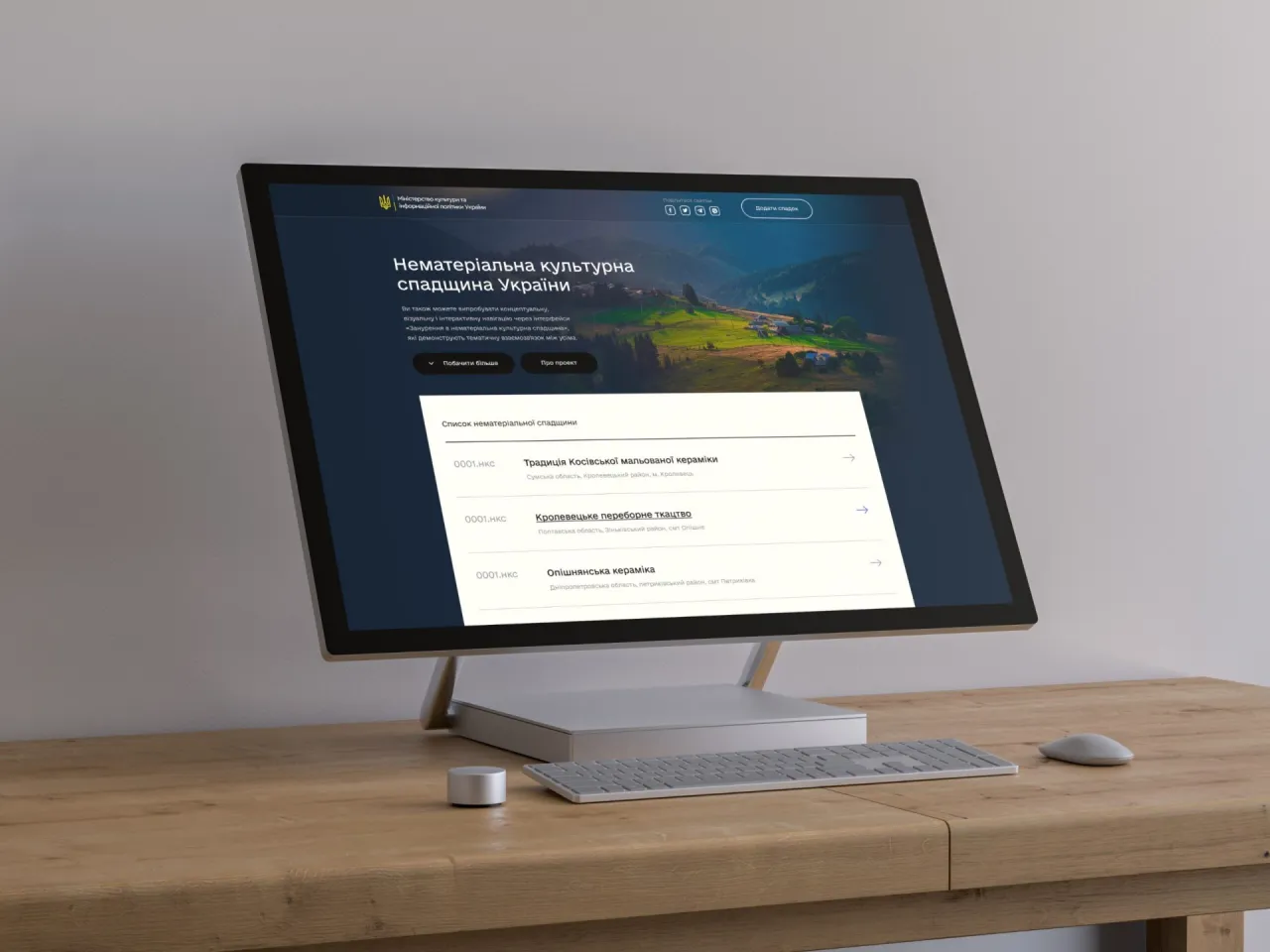
The project
A national platform run by Ukraine's Ministry of Culture and Information Policy that catalogs and presents the country's intangible cultural heritage: the official online home for traditions, crafts, rituals and living heritage elements, maintained under the Law of Ukraine "On Culture".
Intangible heritage is an awkward thing to put in a database. A heritage element is not an object with dimensions. It is a practice held by a community in a specific place, with bearers, a history, a legal status and a documented record of why it was inscribed. The platform has to serve two audiences at once: a researcher or ministry official who needs the registry entry with its formal attributes, and a member of the public who arrived after seeing a news story about a local tradition.
What we did
DForce delivered full-cycle design and development.
- A catalog and registry of heritage elements with the rich informational content each entry requires, structured so an element can be found by what it is and by where it comes from.
- A modern client-rendered single-page application, giving the browsing and filtering experience the catalog needs.
- A clear, accessible structure for a broad public audience, so the same entry works for a specialist reading it as a record and for a visitor reading it as a story.
- A government-grade Ukrainian-language experience under the ministry's brand, matching the presentation standards expected of a national institution.
Engineering notes
- The registry is the product. Everything else - navigation, search, editorial pages - exists to get someone to the right element entry, so the entry model was designed first.
- Two reading modes for one record. The formal registry attributes and the narrative description live in the same entry rather than in separate "official" and "public" versions, which keeps the record single-sourced.
- Public-sector presentation standards. Content structure, language and accessibility follow what a national platform is expected to provide rather than what is convenient to build.
- Built to grow. The inventory of inscribed elements expands over time, so the catalog is structured for continuous addition by the ministry rather than for a fixed launch set.
Highlights
- A flagship public-sector platform operating at national level
- Preserves and popularises Ukrainian cultural heritage online
- Built to government standards for content and accessibility
Services: Product, Design, Engineering. · ich.mcsc.gov.ua