Case Study
Meest Shopping
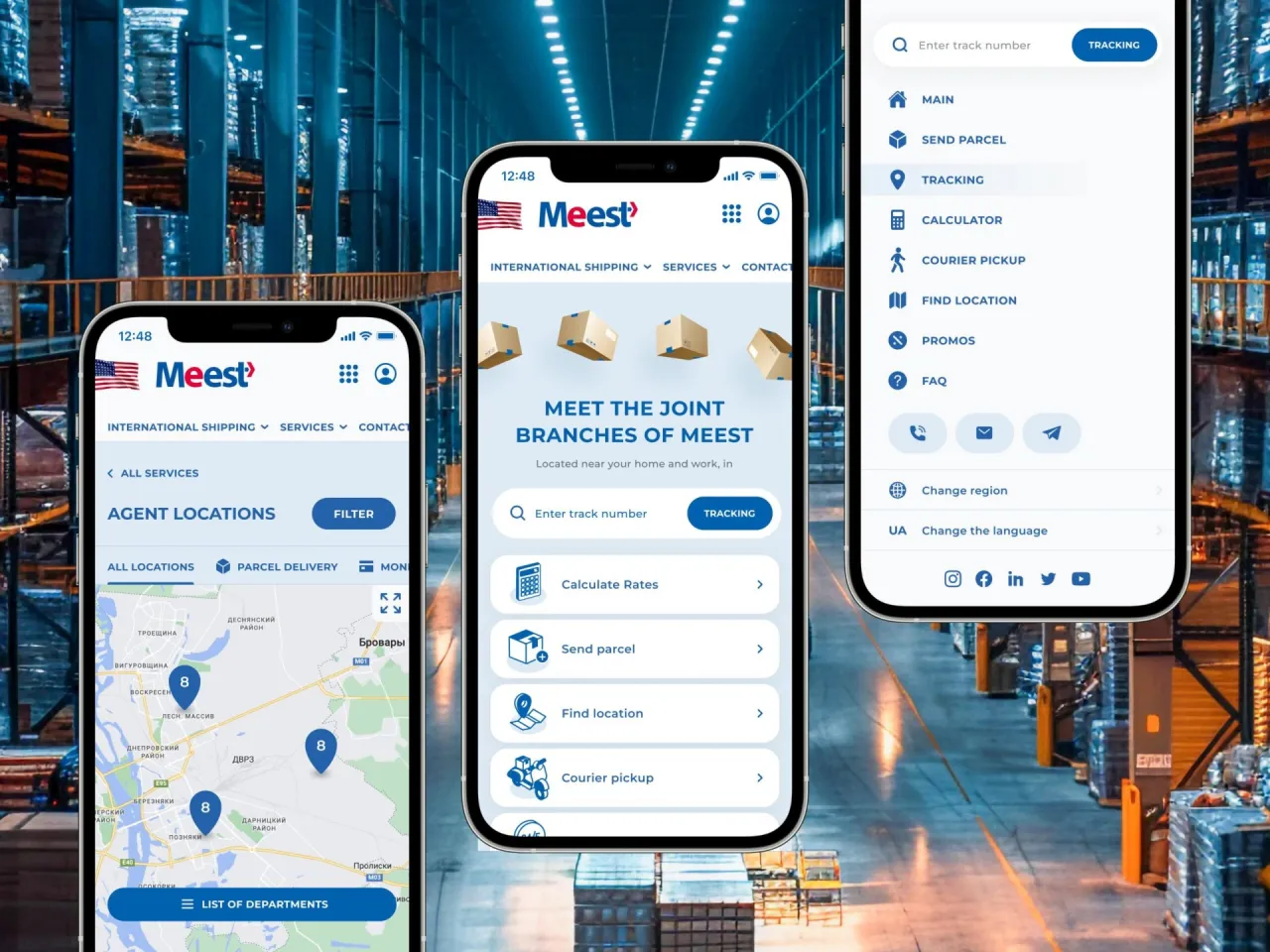
Support for logistics and e-commerce platform for delivering goods abroad to Ukraine.
Visit site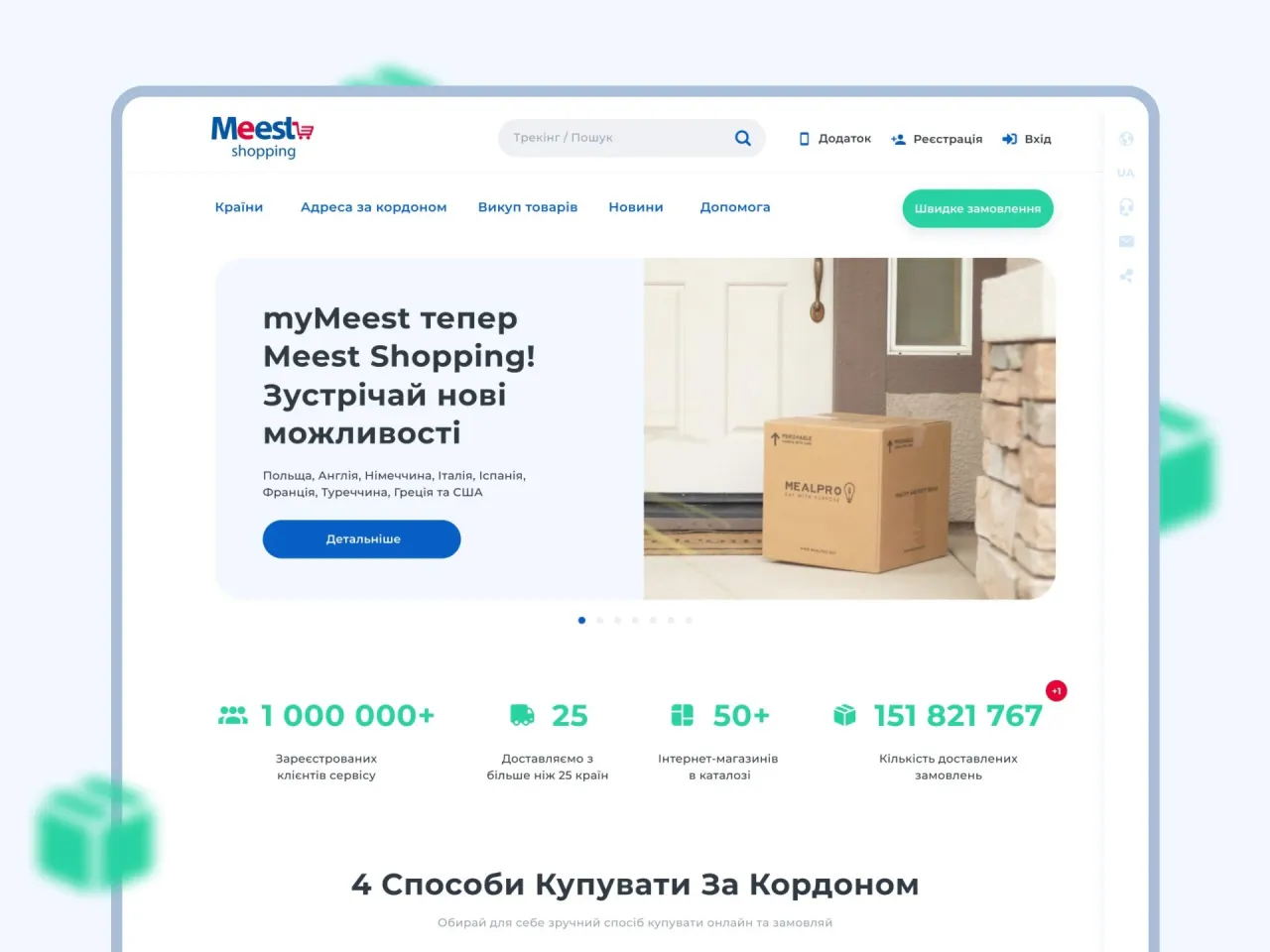
The project
Meest Shopping exists to solve one sentence: "this store does not ship to Ukraine." Customers get a virtual address in the country they want to shop in, buy as a local, and have their parcels consolidated and forwarded home.
The category is unusual because the platform sits between the customer and a purchase it does not control. The order is placed on someone else's checkout, the parcel arrives at a warehouse under a name the customer typed themselves, and the final price depends on weight nobody knows until the box is on a scale. Every one of those steps is a place where a first-time user quietly gives up. Most of the product work is removing that doubt before it appears.
What we did
DForce provides IT and design support across the platform.
- Virtual addresses in 13 countries - the USA, Poland, the UK, Spain, Germany, Italy, France, Canada, the Czech Republic, Portugal, Greece and Ukraine - each presented as a concrete address the customer can paste into a foreign checkout, not as an abstract "service".
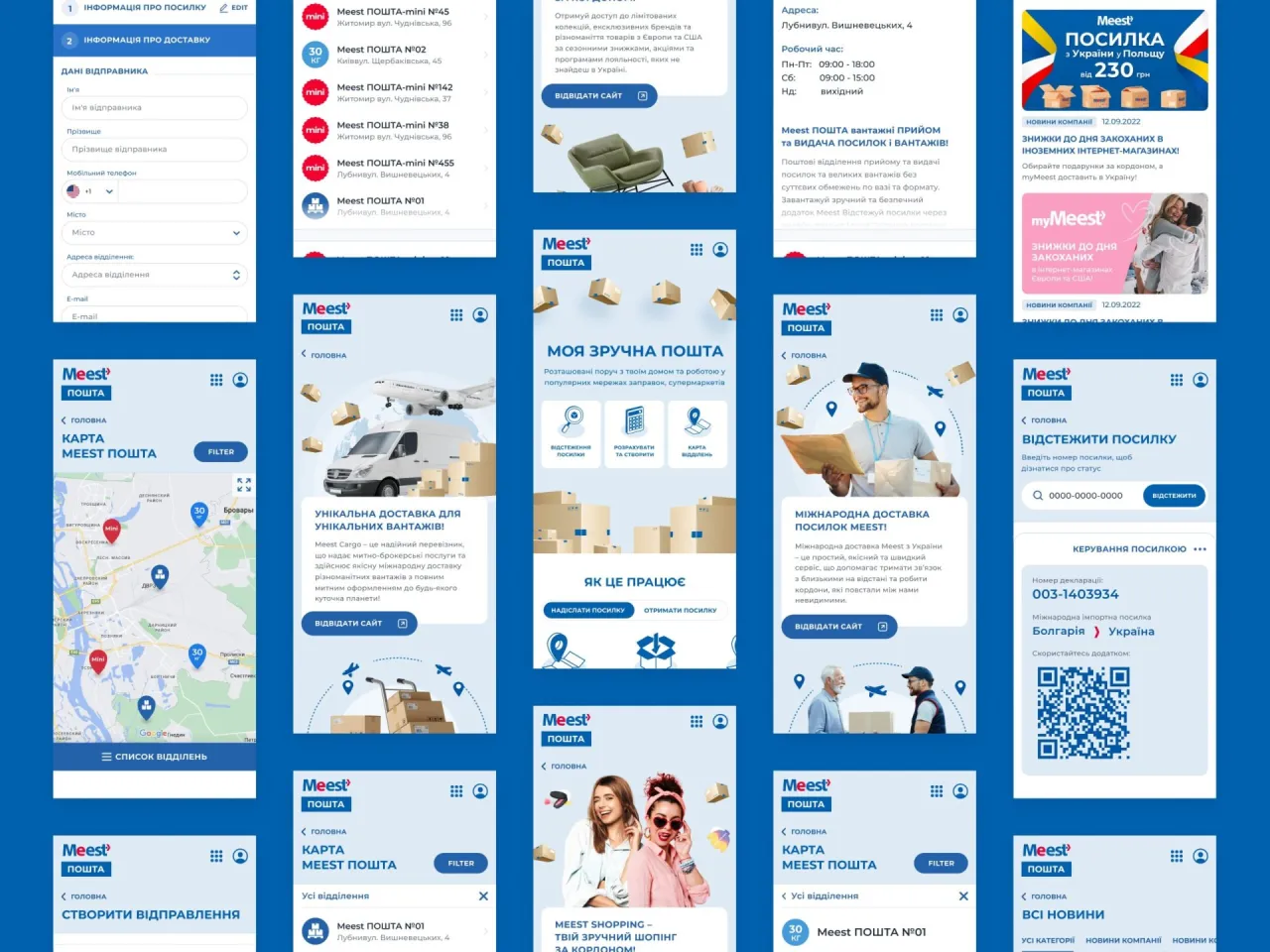
- A three-step flow (register, buy, receive) held consistent everywhere, because the single biggest drop-off is people not believing they understood the process.
- Order consolidation, so several purchases become one shipment and one shipping cost.
- A shipping calculator available before registration. Price certainty is the objection, so it is answered before the signup wall rather than behind it.
- Full tracking through to courier or branch, reusing the Meest delivery network on the Ukrainian side.
- Assisted purchase - a personal-shopper service for stores that reject foreign cards, which is the failure mode a virtual address alone does not fix.
- A 1,000+ store catalog (Amazon, ZARA, H&M, Sephora and others) organized by country, plus a discount calendar, blog, video guides and FAQ.
- A mobile app and a support layer across email, chat and social channels.
Engineering notes
- Country is the primary axis. Available stores, addresses, rates and customs rules all vary per country, so the catalog, the calculator and the content are keyed on country rather than bolted onto a single global list.
- Two languages across a long funnel. UA and RU have to hold from the catalog through calculator, registration, tracking and payment. A funnel this long is where localization normally leaks.
- Content is acquisition. The blog, the store catalog and the discount calendar are how people find the service in the first place, so they are built as indexable surfaces rather than as marketing decoration.
- The unknown weight problem. Because final cost depends on the parcel's actual weight, the calculator, the account and the notifications have to agree on what is estimated and what is final at every step.
Highlights
- Turns "this store does not ship to Ukraine" into a solved problem
- A clear register, buy, track, pay journey held together in UA and RU
- Catalog and content that drive discovery and repeat use
Services: Product, Design, Engineering. · meest.shopping
Service: e-commerce platform development